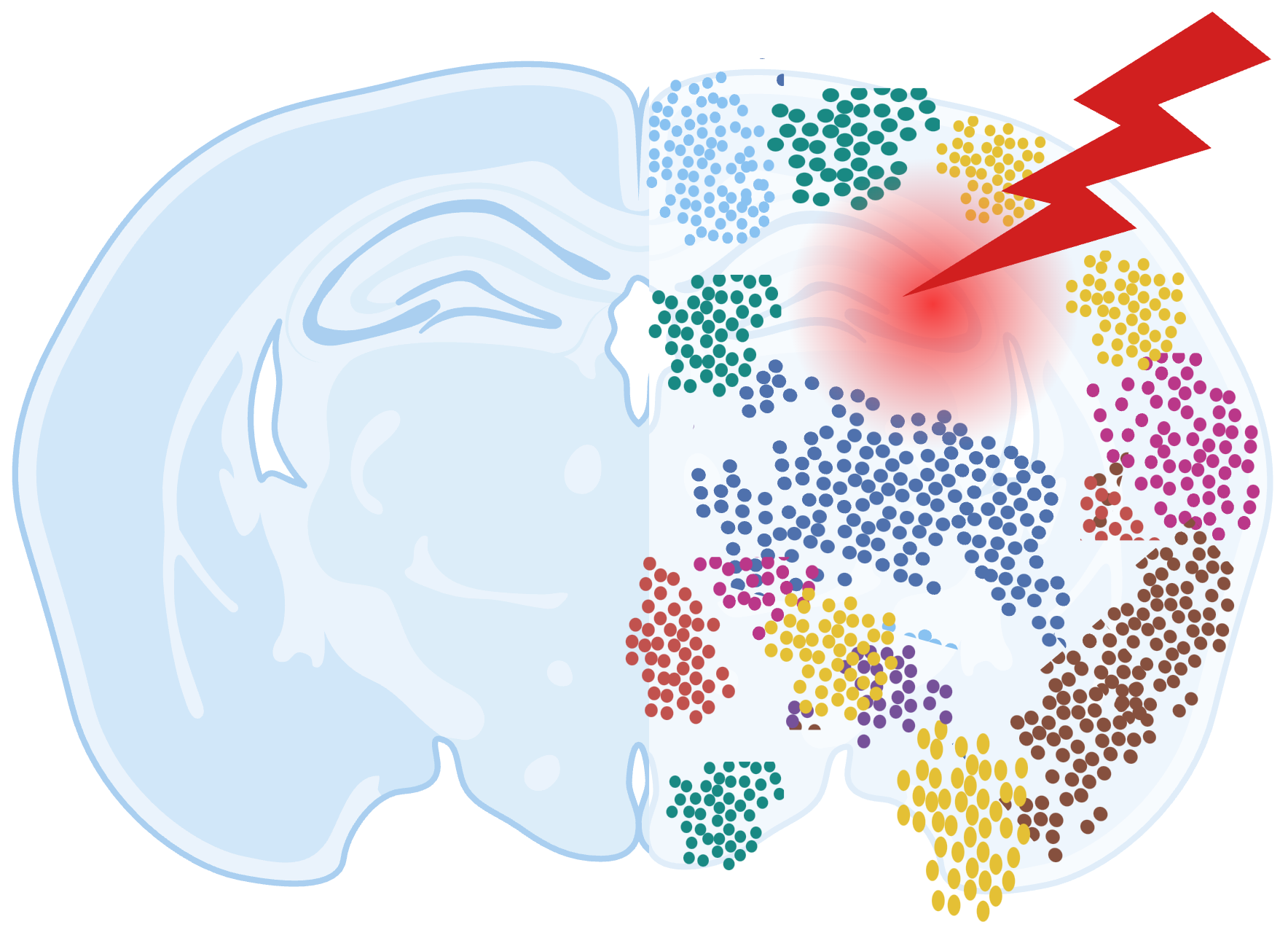
 CEREBRI
CEREBRI
Cellular Exploration and REsolution of BRain Injury
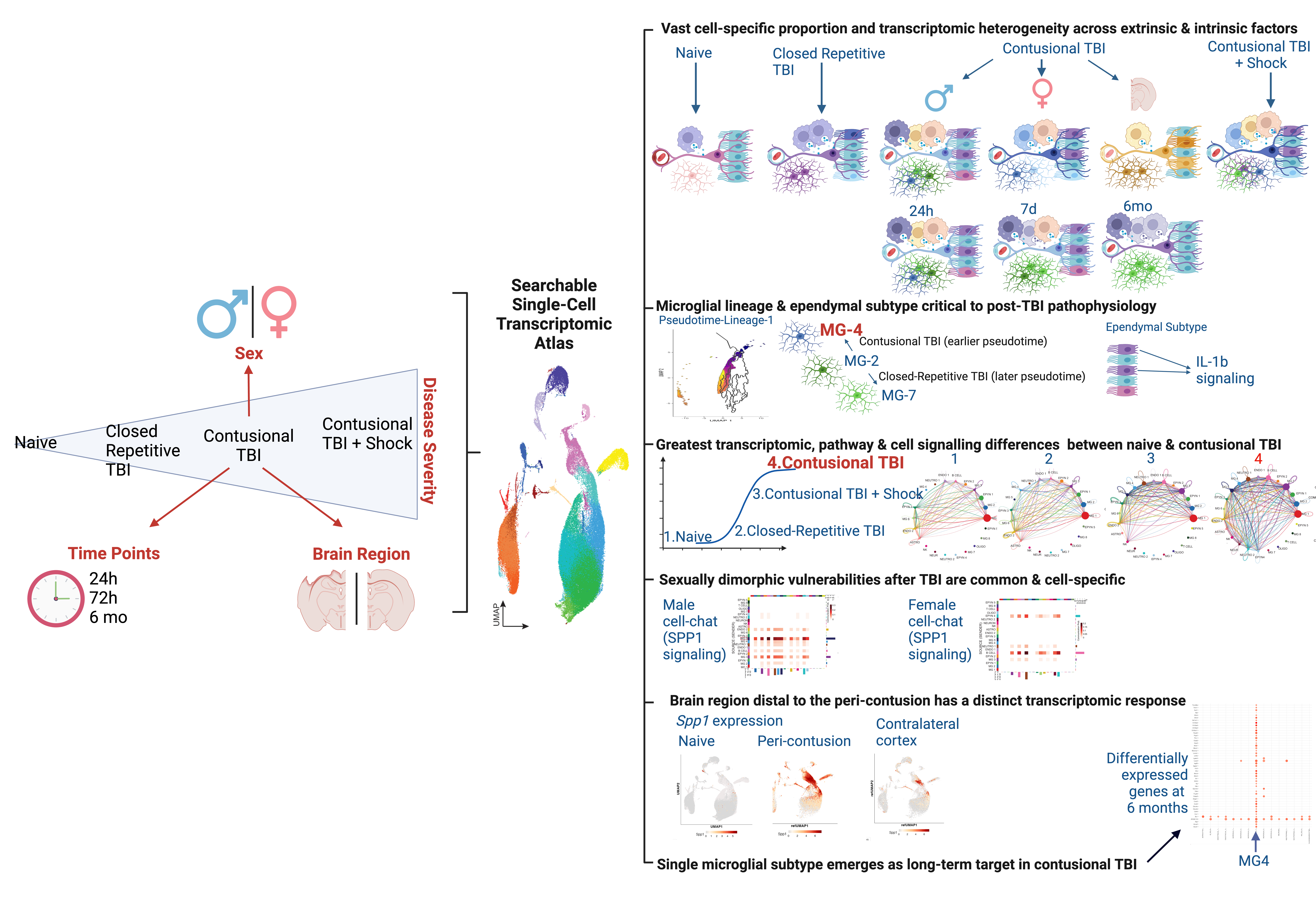
This interactive single-cell atlas is the culmination of an extensive collaborative research effort investigating heterogeneity across three well established and clinically relevant murine traumatic brain injury (TBI) models. In addition to extrinsic-model based differences, we also explore intrinsic differences in the response to TBI as foundational steps demonstrating the cell-specific complexity of response to a primary TBI- these include sex differences, the effect of distance from the impact site, and time from injury. In this interactive web-based platform, we have documented several key variables across all these variables that can be explored and customized based on individual preferences. Please click the button below to read our Abstract, or select one of the tabs in the navigation bar to explore the atlas. This is a living-atlas in that we are continuing to build upon this with additional samples and variables.
Graphical Abstract
Contact Us
Ruchira M. Jha, MD MSc
Division Chief | Neurocritical Care
Barrow Neurological Institute
St. Joseph's Hospital and Medical Center
240 W Thomas Road
Phoenix, AZ 85013
Email: Ruchira.jha@barrowneuro.org
Co-Corresponding Author and Shiny App Maintenance:
Dhivyaa Rajasundaram, PhD
Director | Bioinformatics Core
Division of Health Informatics
University of Pittsburgh School of Medicine, Pittsburgh
Email: dhr11@pitt.edu
Co-Corresponding Authors:
Gary Kohanbash, PhD
Assistant Professor of Neurological Surgery
UPMC Children's Hospital of Pittsburgh
Email: gary.kohanbash2@chp.edu
Patrick M. Kochanek, M.D., MCCM
Distinguished Professor of Critical Care Medicine
Ake N. Grenvik Professor and Vice Chairman of Critical Care Medicine
Professor of Anesthesiology and Perioperative Medicine, Pediatrics, and Clinical and Translational Science
Director | Safar Center for Resuscitation Research
UPMC Children's Hospital of Pittsburgh
Email: kochanekpm@pitt.edu
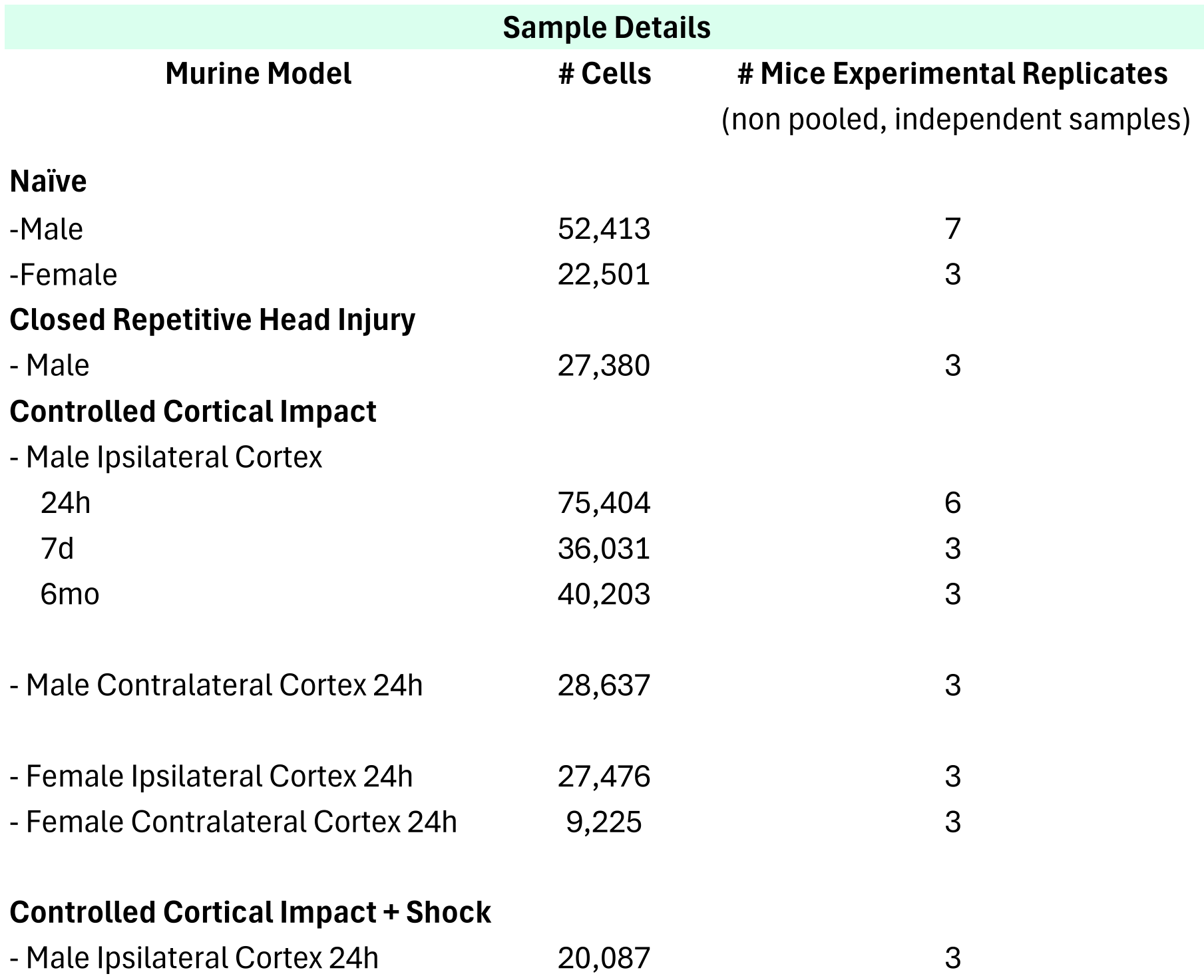
Sample Metadata
Reference


Visitor Analytics (Live)
CCI = controlled cortical impact, rCHI = repetitive closed head injury, HS = hemorrhagic shock, 24h = 24 hours after primary impact, 6mo = 6 months after primary impact, 7days = 7 days after primary impact,
Cell Type and Gene Expression on reduced dimensions
In this tab, users can visualise both cell information and gene expression side-by-side on low-dimensional representions.Dimension Reduction
Coexpression of two genes on reduced dimensions
In this tab, users can visualise the coexpression of two genes on low-dimensional representions.Dimension Reduction
Cell information / gene expression violin plot / box plot
In this tab, users can visualise the gene expression or cell informationProportion / cell numbers across different cell information
In this tab, users can visualise the composition of single cellsGene expression bubbleplot / heatmap
In this tab, users can visualise the gene expression patterns of multiple genes grouped by clusters.The normalised expression are averaged, log-transformed and then plotted.
Cell Type and Gene Expression on reduced dimensions
In this tab, users can visualise both cell information and gene expression side-by-side on low-dimensional representions.Dimension Reduction
Coexpression of two genes on reduced dimensions
In this tab, users can visualise the coexpression of two genes on low-dimensional representions.Dimension Reduction
Cell information / gene expression violin plot / box plot
In this tab, users can visualise the gene expression or cell informationProportion / cell numbers across different cell information
In this tab, users can visualise the composition of single cellsGene expression bubbleplot / heatmap
In this tab, users can visualise the gene expression patterns of multiple genes grouped by clusters.The normalised expression are averaged, log-transformed and then plotted.
CellType and Gene Expression on reduced dimensions
In this tab, users can visualise both cell information and gene expression side-by-side on low-dimensional representions.Dimension Reduction
Coexpression of two genes on reduced dimensions
In this tab, users can visualise the coexpression of two genes on low-dimensional representions.Dimension Reduction
Cell information / gene expression violin plot / box plot
In this tab, users can visualise the gene expression or cell informationProportion / cell numbers across different cell information
In this tab, users can visualise the composition of single cellsGene expression bubbleplot / heatmap
In this tab, users can visualise the gene expression patterns of multiple genes grouped by clusters.The normalised expression are averaged, log-transformed and then plotted.
CellType and Gene Expression on reduced dimensions
In this tab, users can visualise both cell information and gene expression side-by-side on low-dimensional representions.Dimension Reduction
Coexpression of two genes on reduced dimensions
In this tab, users can visualise the coexpression of two genes on low-dimensional representions.Dimension Reduction
Cell information / gene expression violin plot / box plot
In this tab, users can visualise the gene expression or cell informationProportion / cell numbers across different cell information
In this tab, users can visualise the composition of single cellsGene expression bubbleplot / heatmap
In this tab, users can visualise the gene expression patterns of multiple genes grouped by clusters.The normalised expression are averaged, log-transformed and then plotted.